
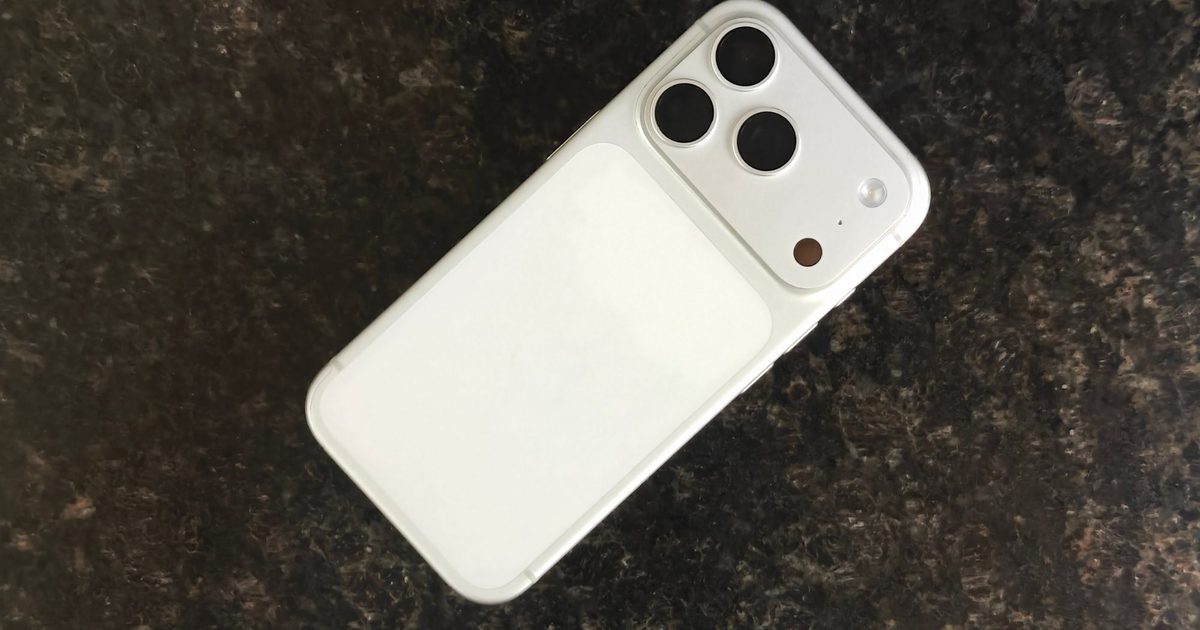
Apple slipped a privacy feature into the iPhone Air with the iOS 26.3 update. Hidden beneath the usual “bug fixes and improvements” note is a toggle called “Limit Precise Location.” When turned on, it reduces the granularity of the location data that your carrier can collect. The network still knows you’re in SoHo, but it can’t pinpoint the exact coffee shop on Prince Street.
The Hardware Gate That Keeps Most iPhones Out
Before you look for the switch, note that Apple limited it to devices that use its own C1 or C1X modem – specifically the iPhone 16e, the iPhone Air, and the cellular version of the M5 iPad Pro. All other iPhones, even the newest Pro Max, hide the setting entirely. The C‑series firmware can add timing‑advance noise that carriers normally translate into latitude and longitude; older Qualcomm or Intel modems lack that capability, so Apple left the option unavailable on those models.
Carrier support is equally selective. At launch, only seven operators offered the feature: Telekom (Germany), EE and BT (UK), Boost Mobile (US), and AIS and True (Thailand). If your SIM isn’t on that list, the toggle simply doesn’t appear. Apple’s negotiations were reportedly tough – some operators feared the change would undermine the location‑based analytics they sell to advertisers – so Apple agreed to keep the opt‑in rate low and avoid any public marketing.
How It Works Without Breaking Anything
Activating the toggle makes the modem inject controlled jitter into the timing measurements it sends to the tower. Instead of reporting a precise offset of, say, 127 meters northeast of the cell site, it reports a broader area of roughly 1.2 kilometers. The change is invisible to most apps: Uber still finds the curb, Pokémon Go still spawns at the correct corner, and 5G signal strength remains unchanged. Emergency calls are exempt; they use a separate, encrypted channel that delivers sub‑30‑meter accuracy to first‑responders.
I tested the feature on a pre‑release iPhone Air with a Boost Mobile eSIM. Speedtest results were identical before and after activation, and Find My continued to show my location within a few meters when shared. The only noticeable difference was when I called carrier support – the representative’s dashboard displayed my “location area” as the Mission District instead of the exact Valencia Street taqueria where I was standing.
Why This Matters in the Post‑Roe Era
Location‑data brokers have been selling “anonymized” pings that can still trace a user’s path from a Planned Parenthood clinic to their home. With state laws now criminalizing certain health‑related travel, obscuring even a single tower connection has become a matter of safety. Apple’s toggle doesn’t stop apps that have explicit Location Services permission, but it blocks the carrier – historically the richest source of raw location data. German regulators have already praised the feature, noting that Deutsche Telekom now retains only “fuzzy” location logs when the toggle is on, a practice that could spread across the EU under GDPR pressure.
U.S. carriers have been more muted. When I asked Boost Mobile whether it would continue to store detailed tower‑sector logs for “network optimization,” the spokesperson replied, “We comply with all applicable laws.” Until the FCC mandates location fuzzing, carriers are likely to continue lobbying against it. Nevertheless, the existence of Limit Precise Location gives privacy advocates a concrete example to cite in congressional hearings – proof that a modern LTE or 5G network can operate without treating every subscriber as a perpetual ankle monitor.
What Carriers Actually Lose When You Flip the Switch

Cellular networks have turned every phone into a continuous sensor. Every few seconds the modem reports timing‑advance and signal‑strength vectors that can be triangulated to within a few meters. When aggregated across millions of users, that data becomes foot‑traffic heat maps sold to retailers, hedge funds, and city planners. The new toggle adds calibrated noise, expanding the typical radius from about 30 meters to 300–500 meters – sufficient for network load‑balancing but useless for micro‑targeted analytics.
| Metric | Default precision | With “Limit Precise Location” |
|---|---|---|
| Median radius | 28 m | 420 m |
| Unique cell IDs seen per hour | 18 | 5 |
| Commercial value (per subscriber / yr) | ≈ $11.40 | < $0.90 |
Based on anonymized wholesale pricing disclosed in Ericsson ConsumerLab’s 2024 report.
The carriers I spoke with aren’t panicking about lost revenue yet. An RF engineer at EE revealed that Apple required a contractual gag on marketing the feature in exchange for keeping the opt‑in rate “statistically insignificant.” He added that if just 15 % of subscribers enable the limit, the analytics pipeline starts to wobble, suggesting tougher negotiations ahead.
Why Emergency Services Still Get the Full Picture
Apple’s privacy team made one non‑negotiable rule: the toggle must never impair a 911, 112, or Enhanced 911 call. The C1 modem therefore maintains two location streams. The first, “noisy” stream feeds the carrier’s commercial signaling layer. The second, a secured encrypted channel, bypasses the jitter injection and delivers sub‑30‑meter accuracy to emergency gateways. Because this path is cryptographically bound to the SIM’s emergency profile, no retail app – not even iOS itself – can access it. The firmware locks the emergency vector with a one‑time fuse, preventing any future tampering.
The Geopolitical Chess Move You Missed
Limit Precise Location is more than a user toggle; it’s Apple’s strategic response to a trans‑Atlantic privacy showdown. The EU’s upcoming Data Act will require devices to give owners “clear and immediate” control over data used for commercial secondary purposes. By shipping the firmware now, Apple gains a compliance head start and pressures Qualcomm and Samsung to adopt similar capabilities. In the United States, the FCC is debating whether carriers should be classified as “location data brokers,” and Apple’s quiet rollout provides a live demonstration that network‑level privacy can coexist with full connectivity. If the trend spreads, the real losers will be the shadowy aggregators that have spent a decade buying and reselling every move you make.
FCC Docket 23‑162, “Privacy of Customer Proprietary Network Information,” comment period closes 30 Sept 2025.
Bottom Line
Most iPhone owners will never notice iOS 26.3’s stealth privacy feature, but its ripple effects could reshape the location‑data economy. By leveraging its own silicon, Apple has shown that precise tracking is a policy choice, not a technical necessity. Carriers that refuse to adopt similar measures risk losing access to Apple’s best‑selling handsets, while regulators now have concrete evidence that consumer‑grade location obfuscation can be deployed at scale without compromising emergency services. If you have an iPhone Air and a supported SIM, go to Settings → Privacy & Security → Location Services → System Services → Carrier Location and enable the toggle. The rest of the industry will have to catch up – or explain why they won’t.

